
Article by Dr. Céline Merheb
Research Coordinator and Associate Dean for Development at the Faculty of Political Science and International Relations, Université La Sagesse
When a trafficking case surfaces in Lebanon, it rarely lives in one place. It may appear in a police file, a social-affairs database, a ministry’s paper register, and an NGO’s case-management system; each holding a fragment, none holding the whole. No single institution can reconstruct the full trajectory of the case, and no national figure can be checked against another.
The instinctive response is to assume that Lebanon lacks data on trafficking. The research we carried out at the Faculty of Political Science and International Relations at Université La Sagesse (Dr. Elie Al Asmar & Dr. Céline Merheb, and 3 junior researchers (students of the FPSIR): Cyril Salloum, Jana Raad, Bilal Khechiche), in partnership with IOM Lebanon, found the opposite. Across fifteen national and international institutions data is being collected — by ministries, security agencies, UN agencies, and civil society alike. The problem is not scarcity. It is that the data cannot be connected, compared, or trusted at the national level.
There is now an international tool designed for exactly this. The International Classification for Administrative Data on Trafficking in Persons (IC-TIP), developed by UNODC and IOM and endorsed by the UN Statistical Commission in 2025, translates the legal definition of trafficking into a common set of administrative data categories. That definition is not foreign to Lebanon: it runs in a direct line from the Palermo Protocol, through Law 164/2011 on combating trafficking in persons, to IC-TIP. The framework Lebanon needs is already aligned with the law Lebanon already has.
What our assessment revealed is a set of structural gaps rather than a failure of will. Much of the justice sector still runs on paper. Institutions apply different working definitions of trafficking, shaped by their mandates. And when a case is referred to the judiciary, no feedback returns to the institution that referred it, so the outcome of a case becomes invisible to the very actors who first identified it. These are governance problems, and they have governance solutions.
The path forward we propose is deliberately modest in its legal demands and honest about its practical ones, however, it does require political commitment, coordination, and resources.
The stakes are concrete — and so is the opportunity. Today, Lebanon relies in part on external reporting for its own national picture of trafficking, a picture assembled from unverified, uncoordinated submissions. A nationally owned, IC-TIP-aligned dataset would give the country its own verified figures, strengthen the protection of victims, and place Lebanon in a credible position with its international partners.
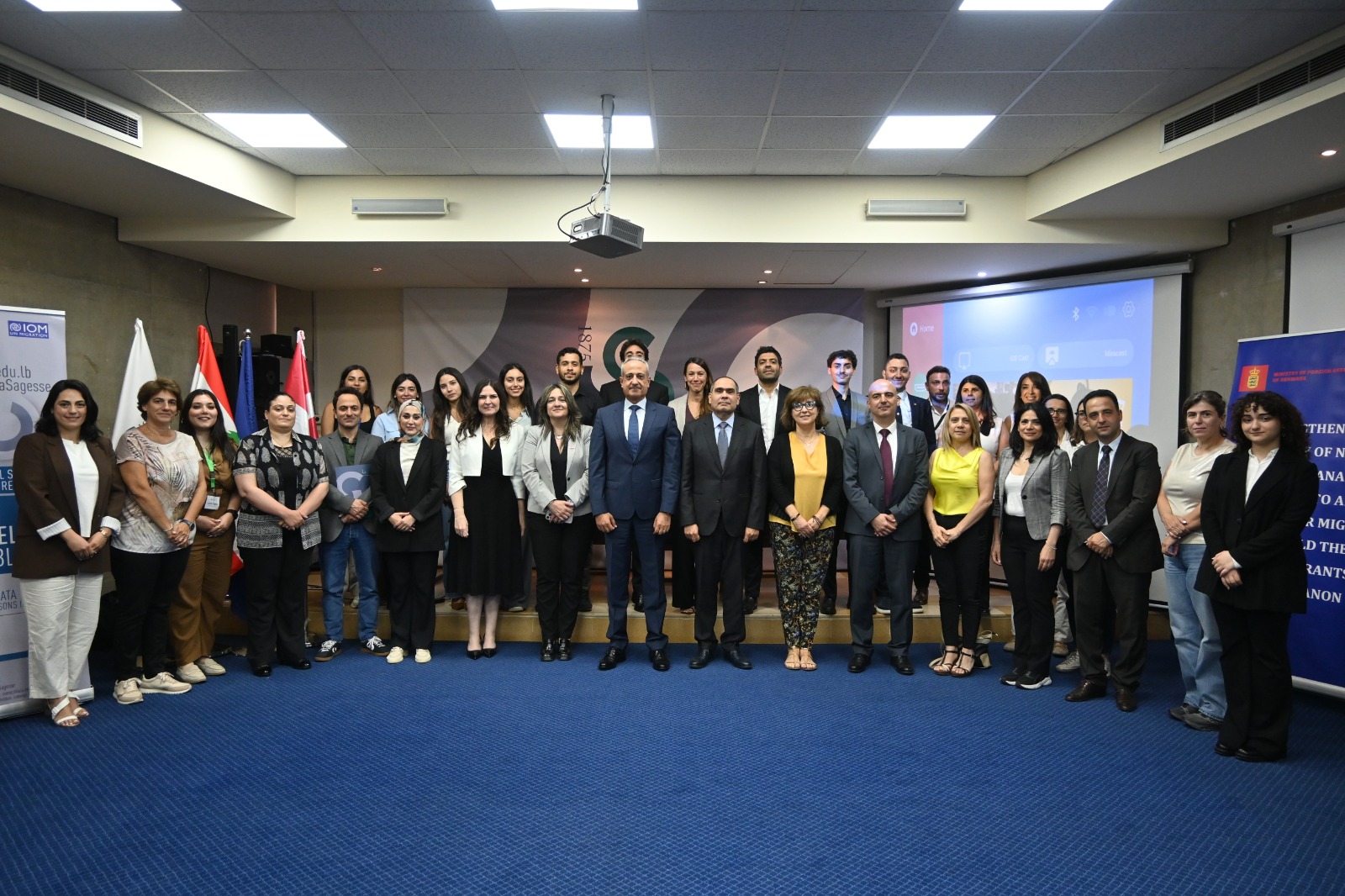
The roundtable we convened on 25 June was not an endpoint. It was an invitation — to the Ministries of Justice, Labor, Social Affairs, Central Administration for Statistics, Public Prosecution Office, security agencies: Lebanese General Security and Internal Security Forces, UN agencies, and civil society actors to recognize trafficking data as shared national infrastructure rather than a set of separate records. The data already exists. What remains is the decision to govern it together.
Upon arrival, we received a warm welcome from UNESCO coordinators who introduced us to the main goals of the convention, which included civic involvement, intercultural understanding, and the engagement of students to contribute toward the construction of more inclusive and responsible societies.
In order to facilitate this exchange, we were formed into multidisciplinary working groups assigned with reflecting on aspects of responsible citizenship: from digital citizenship and environmental sustainability through human rights education, community participation, and ending with ethics in leadership. Within each group, students from various universities came together to discuss challenges, share experiences, and propose practical ideas.
Our groups contributed actively, advancing well-articulated viewpoints that emanated from their academic background and personal engagement. From the implications of misinformation in the digital age to devising initiatives that would promote youth involvement in local communities, the groups showed not only leadership skills but also a strong commitment to positive social change.
Throughout the convention, we engaged in interactive workshops, expert sessions, and open debates. We were provided with ample opportunities to network with our peers, exchange ideas with professionals, and reflect upon our role as emerging citizens within a complex society.
Each group was thus able to present a set of recommendations and project proposals to the organizing committee at the end of the event. These will inform future youth-led initiatives supported by UNESCO.
This experience further enhanced our sense of responsibility and global awareness while presenting the active spirit of our university to the world.