Article by Elissa Biagini & Cyril Salloum
FPSIR, Faculty of Political Science and International Relations
If youth are the future of Lebanon, why don’t we have the control in shaping it?
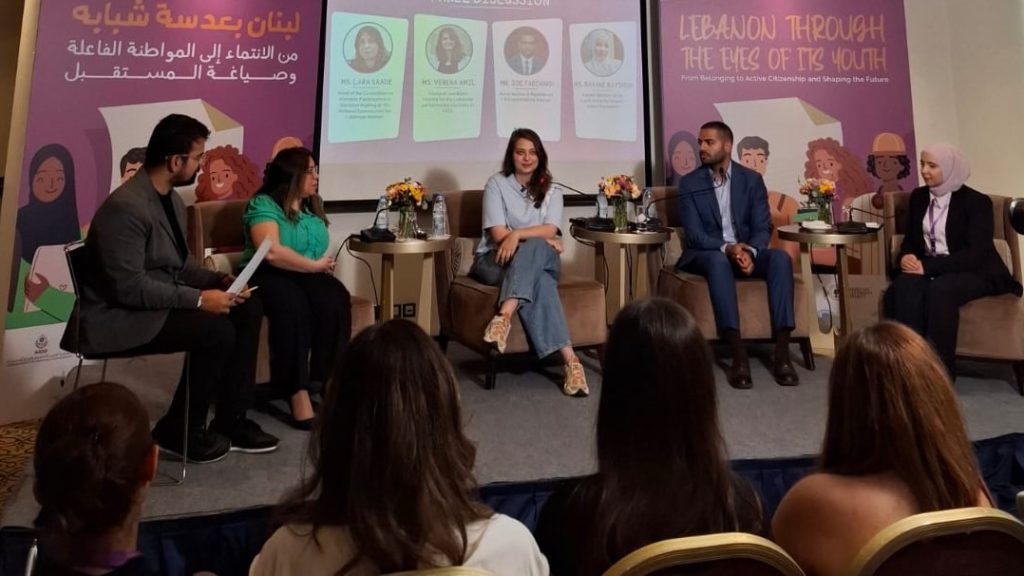
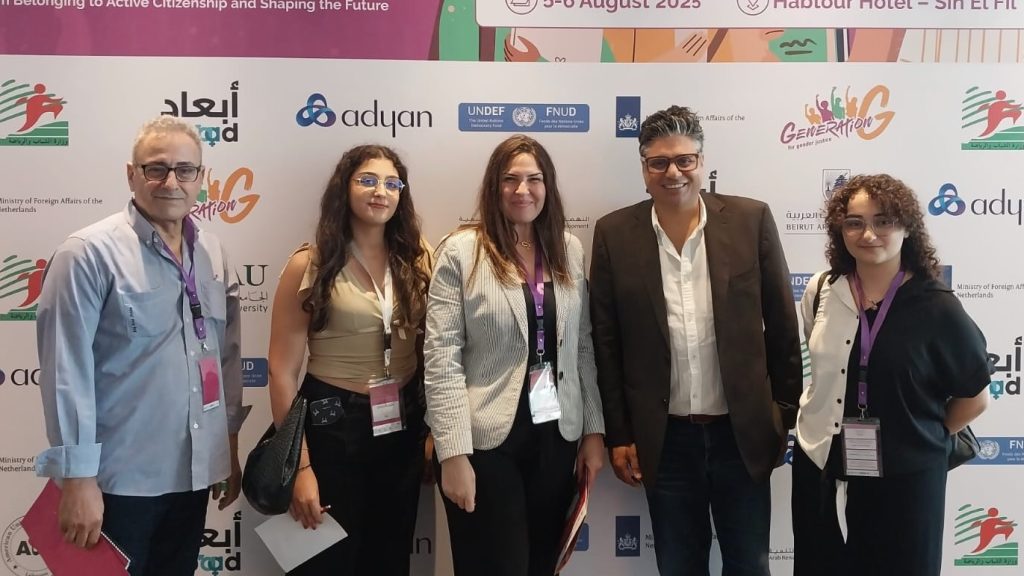
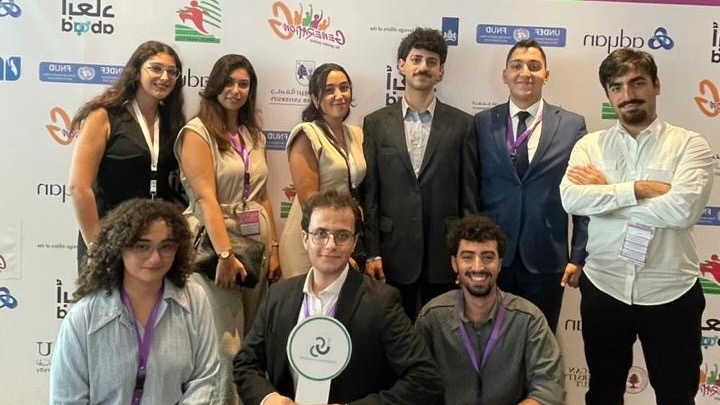
Cyril Salloum, Georges Daou, Jad Bou Chaaya, Clara El Chartouni, Elissa Biagini, Dana Chehade, Jana Raad, Sergio Doumit and Mahmoud Hammoud, students from the Faculty of Political Science and International Relations, represented Université La Sagesse at The National Youth Policy Symposium, hosted by ABAAD MENA & the Adyan Foundation, in collaboration with ARDD (Jordan), challenged that narrative by being placed at the center of discussions on active citizenship.
Across sessions on creating real impact, strengthening storytelling, and protecting our mental health in crises, one theme became clear: youth are not just participants, we are drivers of change.
During the universities exhibition, we represented our university, by making a presentation on the importance of implementing crisis simulations, practical exercises that prepare students to think critically under pressure and urged other universities to adopt them. In the policy lab, we got divided into groups to confront Lebanon’s harsh realities: the denial of a daughter’s right to obtain Lebanese nationality from her mother, the failures of the outdated educational system, the lack of mental assistance for young Lebanese and the unemployability, which is resulted by the lack of job opportunities, as a consequence of the failed economic strategies.
These are not problems, they are lived obstacles that define our generation. Therefore, at the end of the symposium we got to vote on one of the four proposed and pitched policies in order to promote it to MP Simon Abi Ramia chairperson of the parliamentary commission of youth and sports. What this symposium proved is that youth do not lack vision; what we lack is a system that is willing to listen. Until policymakers take our proposals seriously, “youth empowerment” will remain little more than a slogan.