Article by Elissa Biagini
FPSIR, Faculty of Political Science and International Relations
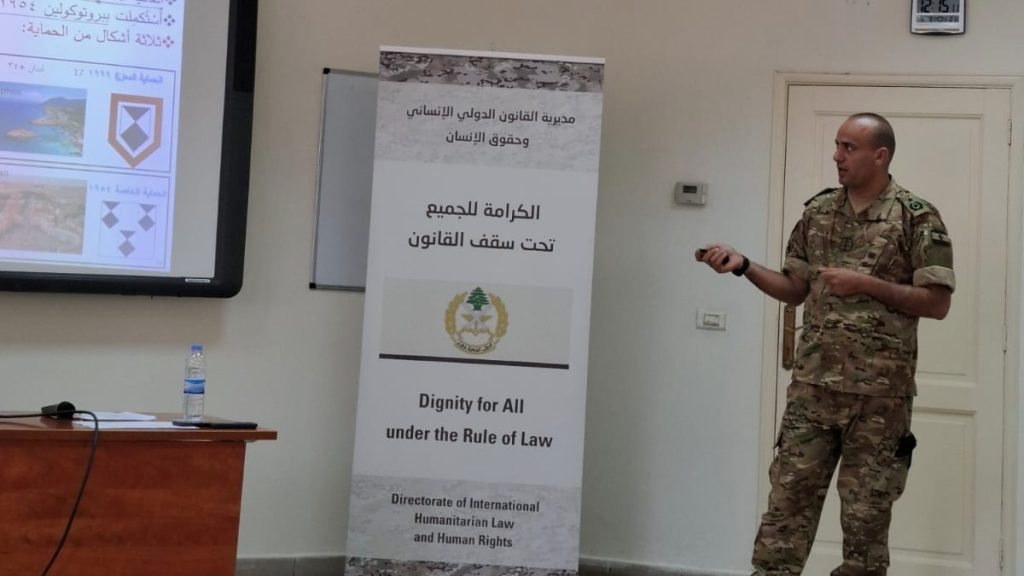
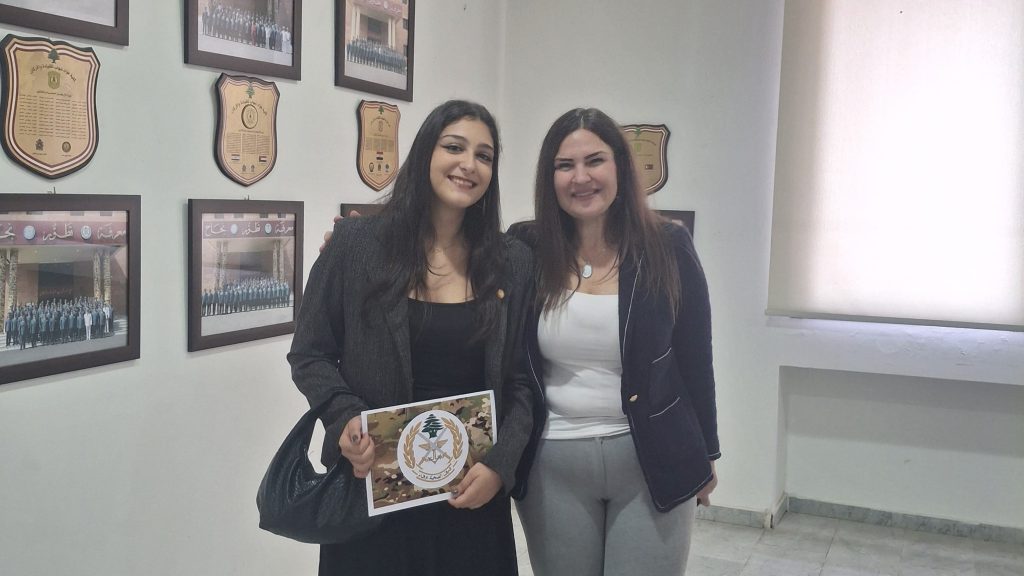
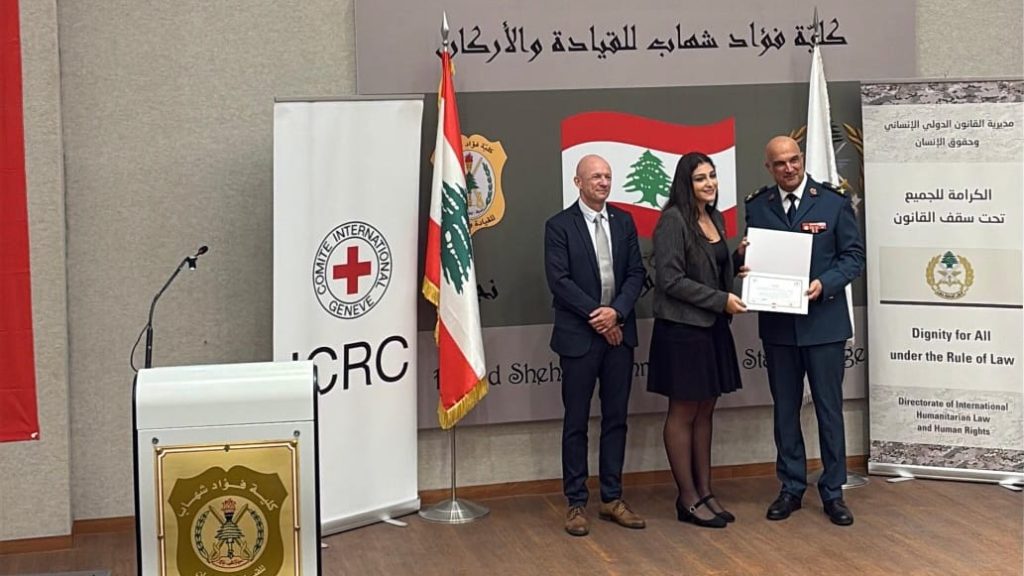
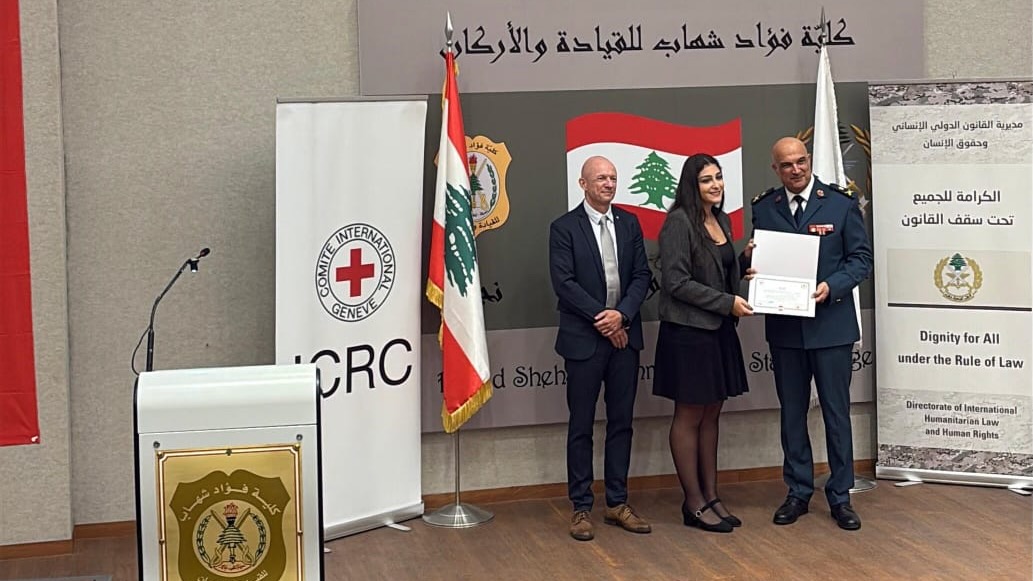
From September 8th to 12th, 2025, I had the privilege of representing the the Faculty of Political Science & International Relations & Université La Sagesse at the 13th edition of the International Humanitarian Law (IHL) training program, hosted by the Lebanese Armed Forces in partnership with the International Committee of the Red Cross (ICRC). For five days at the Fouad Chehab School of Command and Staff, I joined fellow participants in unpacking the rules that govern armed conflict, not to glorify war, but to remind us that even wars have laws and limits.
We studied the Geneva Conventions, Additional Protocols, Common Articles, and Customary law, but what struck me most was not the legal articles and conventions only. It was the reminder that behind every main principle like distinction, proportionality, humanity and military necessity… there’s a large focus on preserving human dignity, even in the darkest of times. Learning from distinguished LAF experts, from Brigadier General Ziad Rizkallah to Lieutenant Colonel Samer Malaaeb, made the vision clear that International Humanitarian Law is not ideal. It is a living tool, one that soldiers, as well as involved and uninvolved citizens must engage with, in order to reduce all types of suffering.
I also had the privilege to attend a specialized session led by MAG International, on the dangers of landmines. In Lebanon, where remains of conflict still scatter across our soil, the urgent reminders of remaining vigilant cannot be underrated, since unexploded devices continue to pose a deadly threat to all of us.
As enriching as this program was, it also left a lingering question in my head: if these laws exist, why are they so often ignored? The gap between all of these articles and practice on the ground of war is wide, but education and awareness is where the bridge begins. That’s why opportunities like this training matter. They remind young people like myself that International Humanitarian Law is not just the concern of legal persons, diplomats or generals; it is our concern too, because it protects any corner of our world if it was in a state of war.
I am grateful to my university and especially to our Vice Dean, Dr. Céline Merheb, for her trust and encouragement in this journey. But more importantly, I leave this experience convinced that Lebanon and the rest of the world needs more knowledge of IHL. It’s true that its implementation is invisible, this lack of visibility can create the false impression that IHL is ineffective, when much of its real impact occurs through quiet compliance and the gradual integration of humanitarian norms within military institutions.
“International Humanitarian Law establishes clear rules that cannot be ignored. It is not an a la carte menu and cannot be applied selectively. All parties must abide by it, including the principles of distinction, proportionality, and precaution.” – António Guterres, UN Secretary-General.