- This event has passed.
Visiting Professor Vincenzo Rosito from the Pontifical John Paul II Institute in Rome at Université La Sagesse

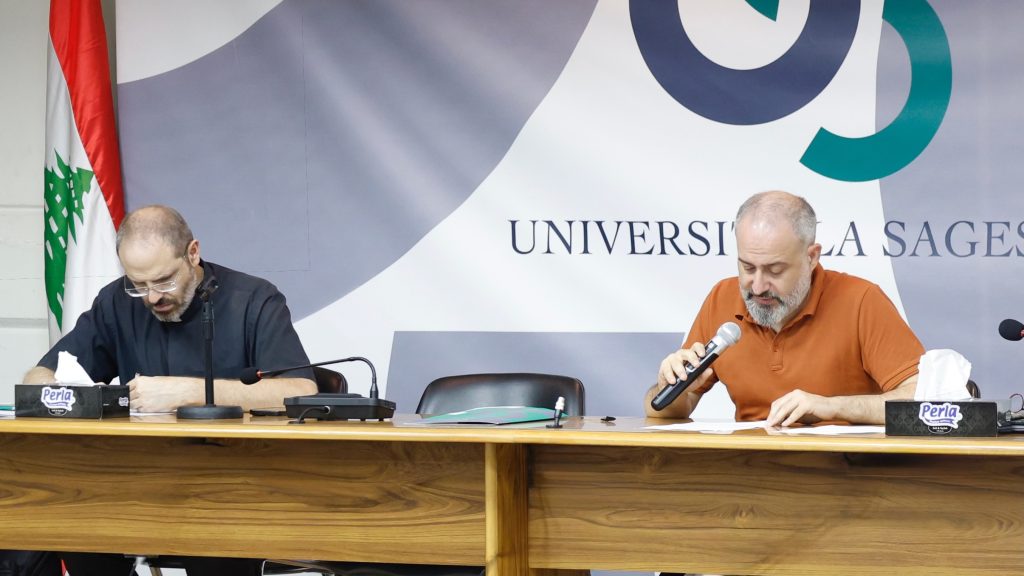
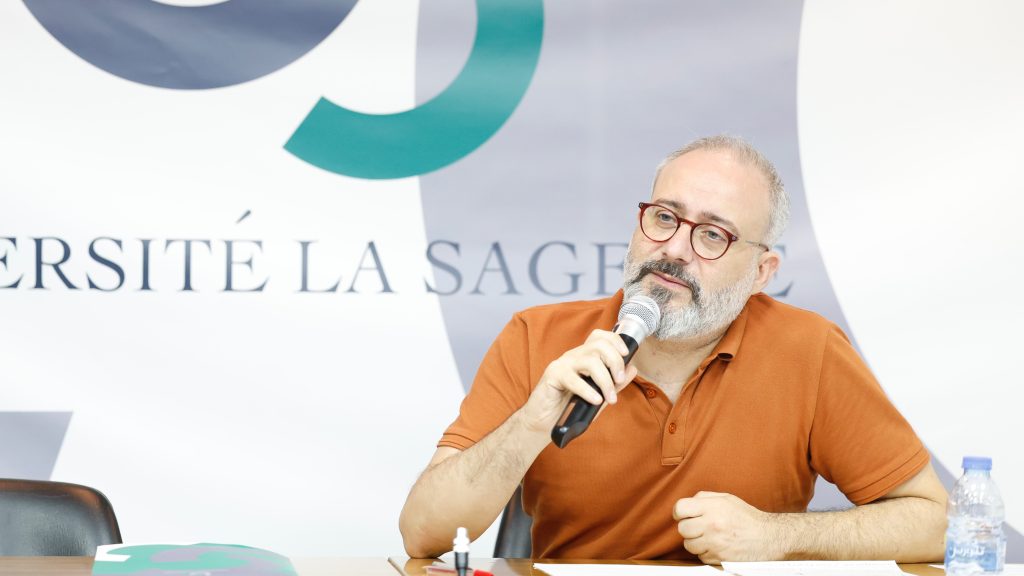
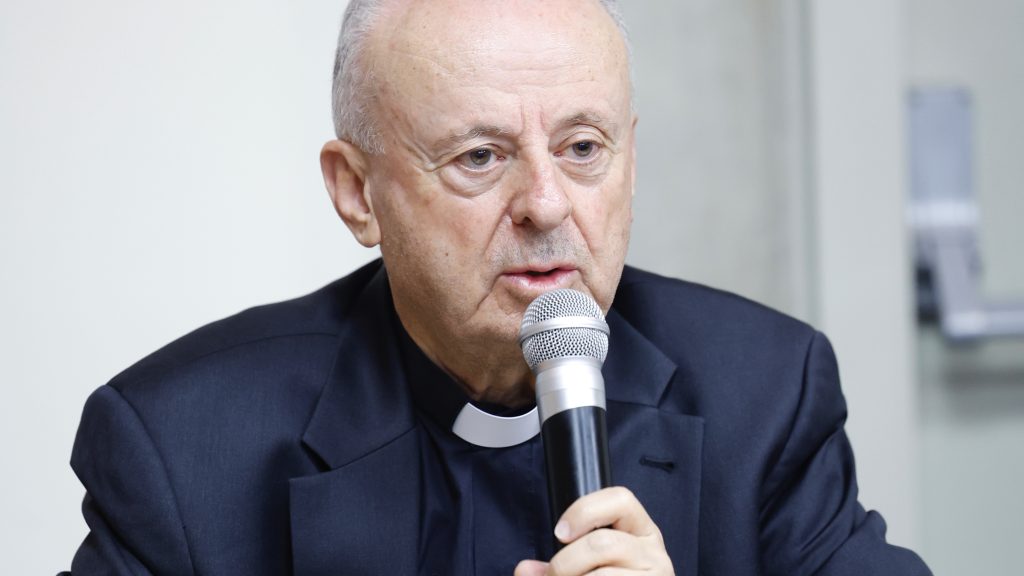
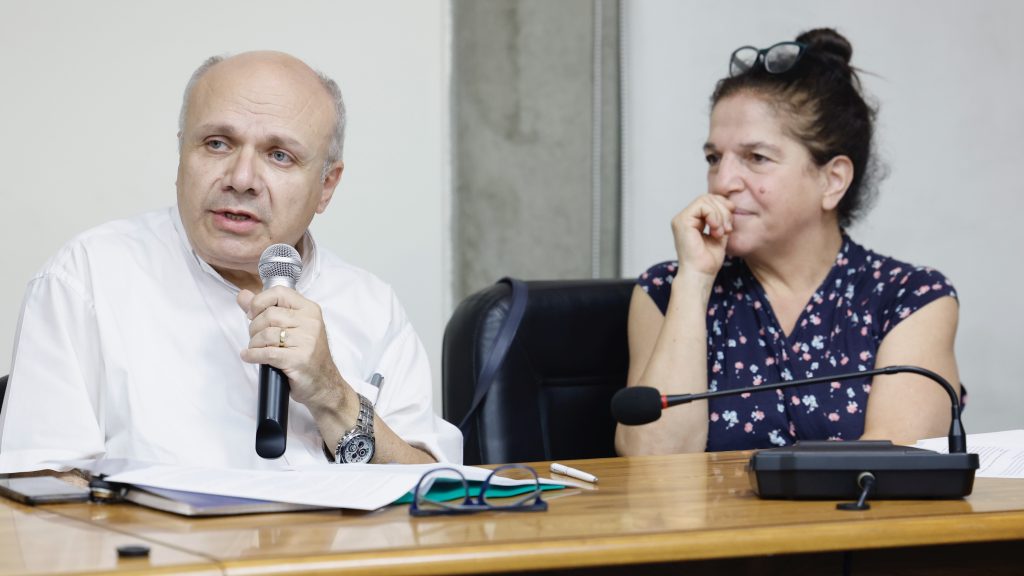
Université La Sagesse hosted visiting Professor Vincenzo Rosito from the Pontifical John Paul II Theological Institute for Marriage and Family Sciences in Rome, as part of the cooperation agreement signed between the university and the institute to organize conferences, workshops, training sessions, and the exchange of knowledge and expertise.
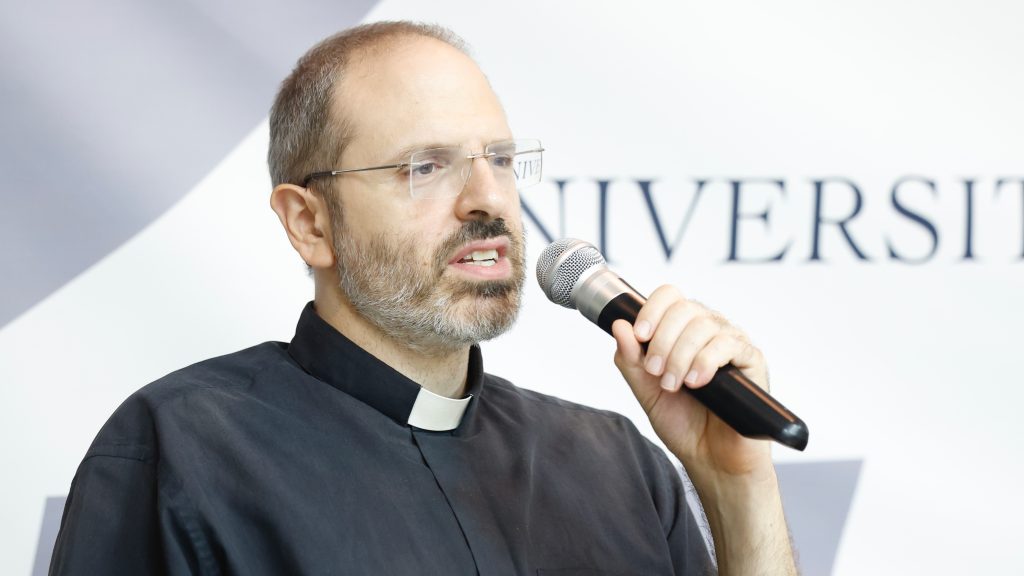
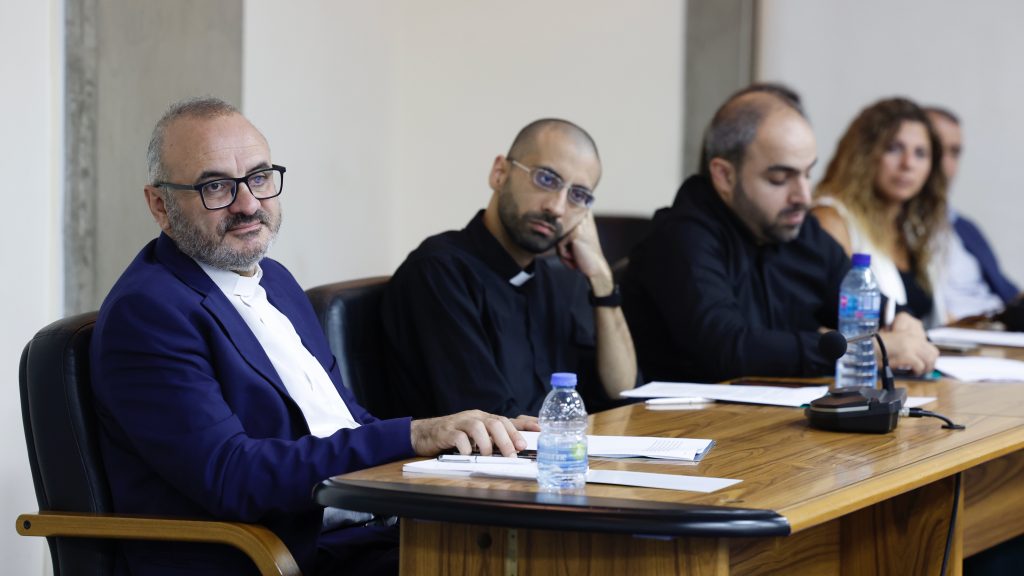
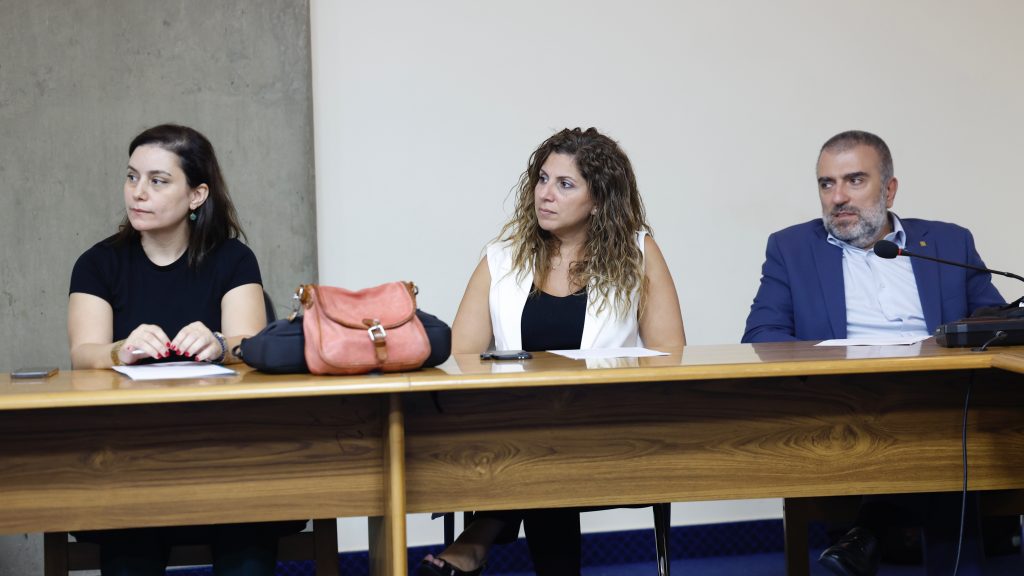
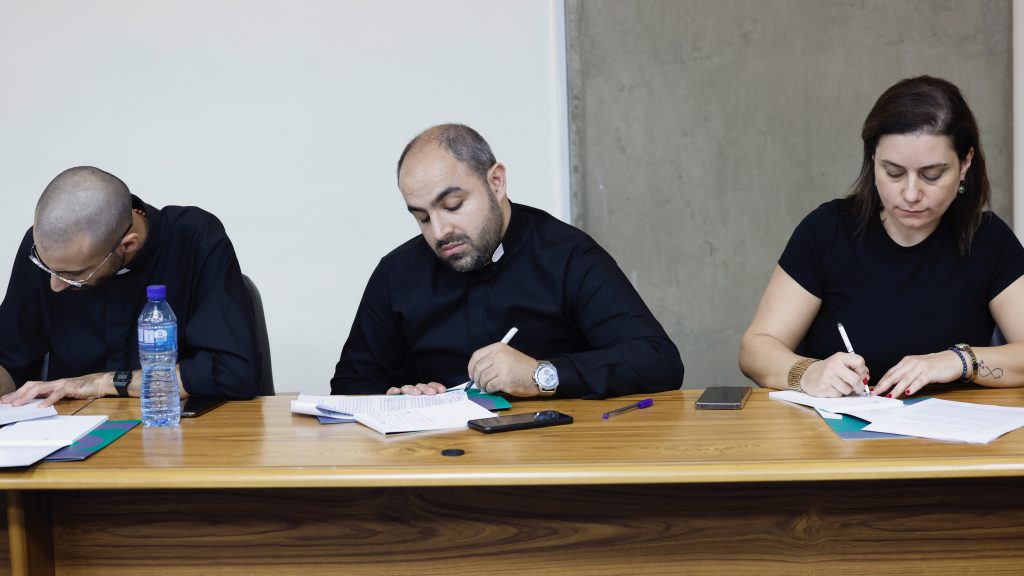
Over the course of three days, Professor Rosito delivered specialized lectures organized by the Director of the Family Institute at Université la Sagesse, Father Youssef Abi Zeid, in the presence of Bishop Antoine Aoukar, the Dean of the Faculty of Religious and Theological Sciences, Father Tanios Khalil, and members of the University Council: Vice President for Academic Affairs Dr. Rayan Haykal, Vice President for Research and Development Dr. Etienne Harb, Vice President for International and Institutional Relations Dr. Lily Assaf, along with a large number of professors from the Faculty of Political Sciences and International Relations and the Faculty of Religious and Theological Sciences.
The lectures focused on the educational experiences and pedagogical guidelines developed at the Institute in Rome in recent years, starting from the effort to put academic communities at the service of the synodal church on the one hand, and to integrate synodal values and practices into the management of academic life on the other. They also addressed ways to prepare students in a meaningful way for the important roles they will play in the synodal Church.
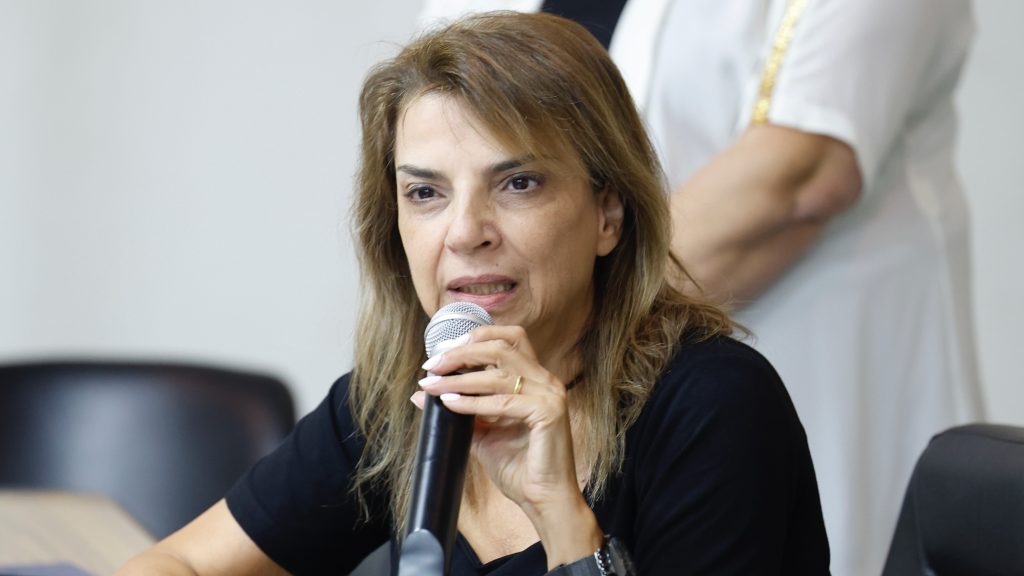
Professor Vincenzo Rosito emphasized that there are three essential missions that shape the role of a university: teaching; researching; communicating the results of research. He added that communication is a core element of these missions, as it conveys the “truths of reality” and the “words of life,” and undoubtedly, academic life is negatively affected when the balance between teaching, research, and communication is disrupted.
Rosito continued by noting that commitment to research—whether individual or collective—is necessary to avoid repeating the same lessons given to students over the years. Moreover, the questions raised by students provide valuable material for research and for preparing comprehensive scientific responses. Therefore, the circularity between teaching and research is fundamental. However, it remains insufficient without adding the third mission, which is communication.
He stressed that through communication, the university demonstrates its commitment to building “the world we share.” This can be achieved by opening up to initiatives with non-academic entities and institutions (associations, professional groups, pastoral movements, and so on). Thus, academic communities do not confine themselves to “teaching” only, but also engage in “learning” through enhanced communication, which in turn leads to improve both teaching and research. Rosito added that this third mission also reflects the professors’ commitment to renewing teaching methods and adopting new research methods.
The visiting professor Vincenzo Rosito also cited a statement by Pope Francis calling for joint efforts to make universities “a sort of providential cultural laboratory in which the Church carries out the performative interpretation of the reality brought about the Christ event.”
The meaning of a “cultural laboratory” in academic life
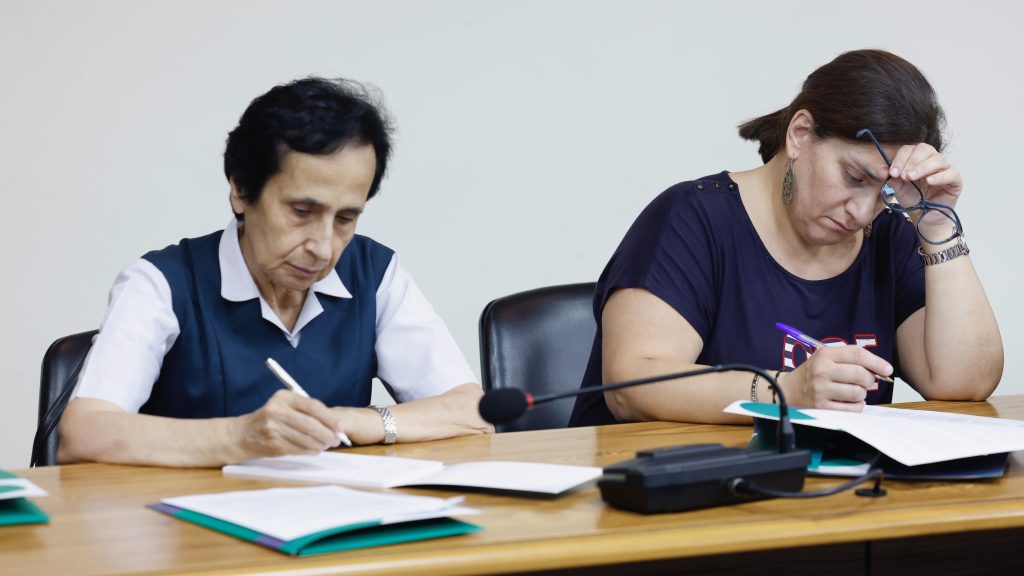
The lectures were followed by workshops in which participants addressed the meaning of a “cultural laboratory” as well as “ways of effectively interpreting reality in academic life.” The discussions emphasized that the university is such a safe laboratory, one that opens the way for learning through experiences, mistakes, revisions, and corrections. It is not merely a place for scientific truths, but also a space that transforms communities as they search for “scientific truths”. It is also that laboratory which discovers ways of dialogue between cultures and within each culture.